 Mobile Small Shaking Table-product-Shaker,crusher,Shaking table,Yunxi shaking table,6-S shaking table,Spiral Chute,spiral classifier,horizontal baler,refining furnace,flotation machine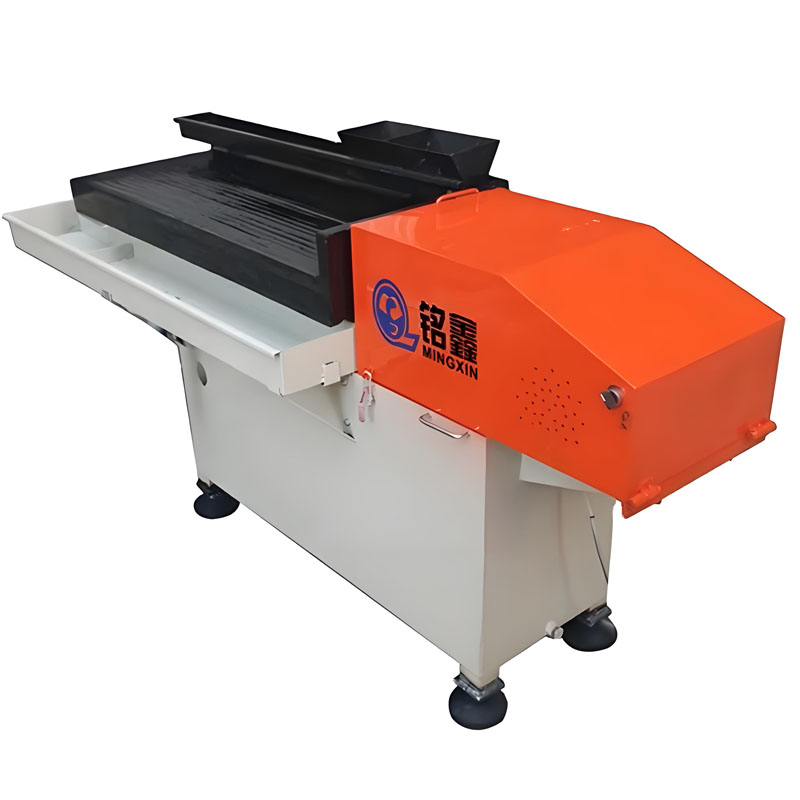
6-S Fiberglass Shaking Table | Gravity Separation Equipment
Model: MX-1100×500
Overview
The shaking table is one of the main equipment for gravity separation. It is widely used in the separation of tungsten, tin, tantalum, niobium, gold and other rare and precious metal ores. It can be used for roughing, concentrating, sweeping and other operations to separate coarse sand (2-0.5mm), fine sand (0.5-0.074mm), ore mud (-0.074mm) and different particle sizes. It can also be used to separate iron, manganese ore and coal. When processing ores such as tungsten and tin, the effective recovery particle size range of the 6-S fiberglass shaking table is 2-0.22 mm.
Technical Specifications
Model: MX-1100×500
Length of stroke: 9-17 mm
Times of stroke: 280~460 min⁻¹
Deck surface tilt range: 0~10°
Capacity: 60~100 kg/h
Water consumption: 0.3~10 L/min (operational: 20-50 L/min)
Deck size (L×W×H): 1100×500×430 mm
Motor model: Y801-4 (0.55 Kw)
Rotate speed: 1390 r/min
V belt: A-1245
Weight: 230 kg
Installation dimensions: 1730×500×800 mm
Feed size: 0.074-2 mm
Working Principle & Classification
【Working Principle】
The ore dressing shaking table makes ore particles move in different directions according to their density and particle size, fanning out along the diagonal from the feed trough, and discharging along the edge of the bed in order. The discharge line is very long, allowing accurate production of various products such as concentrate, sub-concentrate, middling and tailings.
【Main Classifications】
• Sand shaking table
• Slime shaking table
• FRP shaking table
• 6-S shaking table
• LS shaking table
Applications: placer gold, alluvial tin, tungsten, tantalum-niobium, iron-manganese ores and coal cleaning.
Influencing Factors (Operation Guide)
Asymmetry of motion
Coarse-grained materials (hard to loosen, easy to transport) → smaller asymmetry
Fine-grained materials (easy to loosen, hard to move) → larger asymmetryStroke and stroke frequency
Coarse/roughing/heavy load: long stroke (16-30mm) + low frequency (200-250/min)
Fine/cleaning/light load: short stroke (8-10mm) + high frequency (250-300/min)Water volume and slope
Coarse/hard-to-treat/cleaning → larger water flow + gentle slope (thicker water layer)
Fine/easy/roughing → smaller water flow + steeper slope (thinner water layer)
Tilt angle: 0-10°, water volume: 20-50 L/minFeed volume and feed concentration
Excessive feed → thicker bed, worse stratification, lower recovery
Too little feed → reduced capacity
Feed concentration: 15%-25% (higher for coarse, lower for fine)
For sand ore >0.2mm: 0.7-2.3 t/h per unit
For fine particles <0.2mm: 0.2-0.5 t/h per unit
(Note: The capacity of this model is 60-100 kg/h; above values are general references.)Feed particle size and shape
Classification, desliming and de-coarsening before separation are necessary
Round heavy particles and fine slime are easily lost in tailings
Classified materials have uniform particle size, easy operation, and improved capacityEffective Recovery Particle Size Range (for W/Sn ores)
2 - 0.22 mm