 shredder-product-Shaker,crusher,Shaking table,Yunxi shaking table,6-S shaking table,Spiral Chute,spiral classifier,horizontal baler,refining furnace,flotation machine
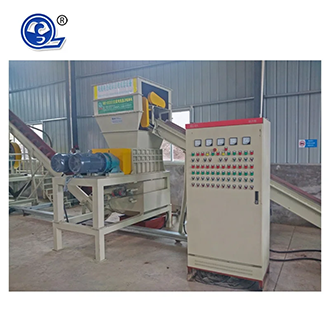
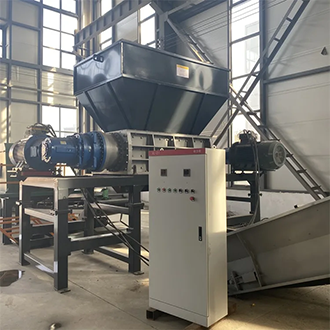
The shredder is the first-stage process equipment in the pretreatment section of spent battery recycling. Its function is to rapidly break down battery cells or modules, separate the metallic casing, separator, and positive/negative electrode sheets from each other, and reduce the material size to a range acceptable for subsequent sorting processes.
In industrial production lines, a two-stage shredding configuration is typically employed. The primary stage uses a double‑shaft shear shredder, which utilises low‑speed, high‑torque cutter rotors to tear the batteries into coarse fragments of 30 to 50 mm, while simultaneously breaking the battery seal and allowing partial release of the electrolyte through volatilisation. The secondary stage then uses a four‑shaft shredder or a single‑shaft shredder equipped with a sizing screen to further reduce the coarse material to uniform particles below 20 mm, promoting full liberation of copper foil, aluminium foil, and the black powder containing lithium, nickel, cobalt, and manganese. This creates favourable conditions for subsequent screening, gravity/density separation, or hydrometallurgical leaching.
The key process control aspects of the shredding step are the stability of the output particle size and the continuity of equipment operation. Cutter wear directly affects the fragmentation gradation, so regular inspection and re‑sharpening of the cutting teeth are required. Additionally, the screen aperture or cutter gap should be adjusted according to downstream sorting requirements. The entire shredding line is generally monitored by an automated control system that tracks equipment load and operating status, preventing overloading and jamming, and ensuring a stable production rhythm.